


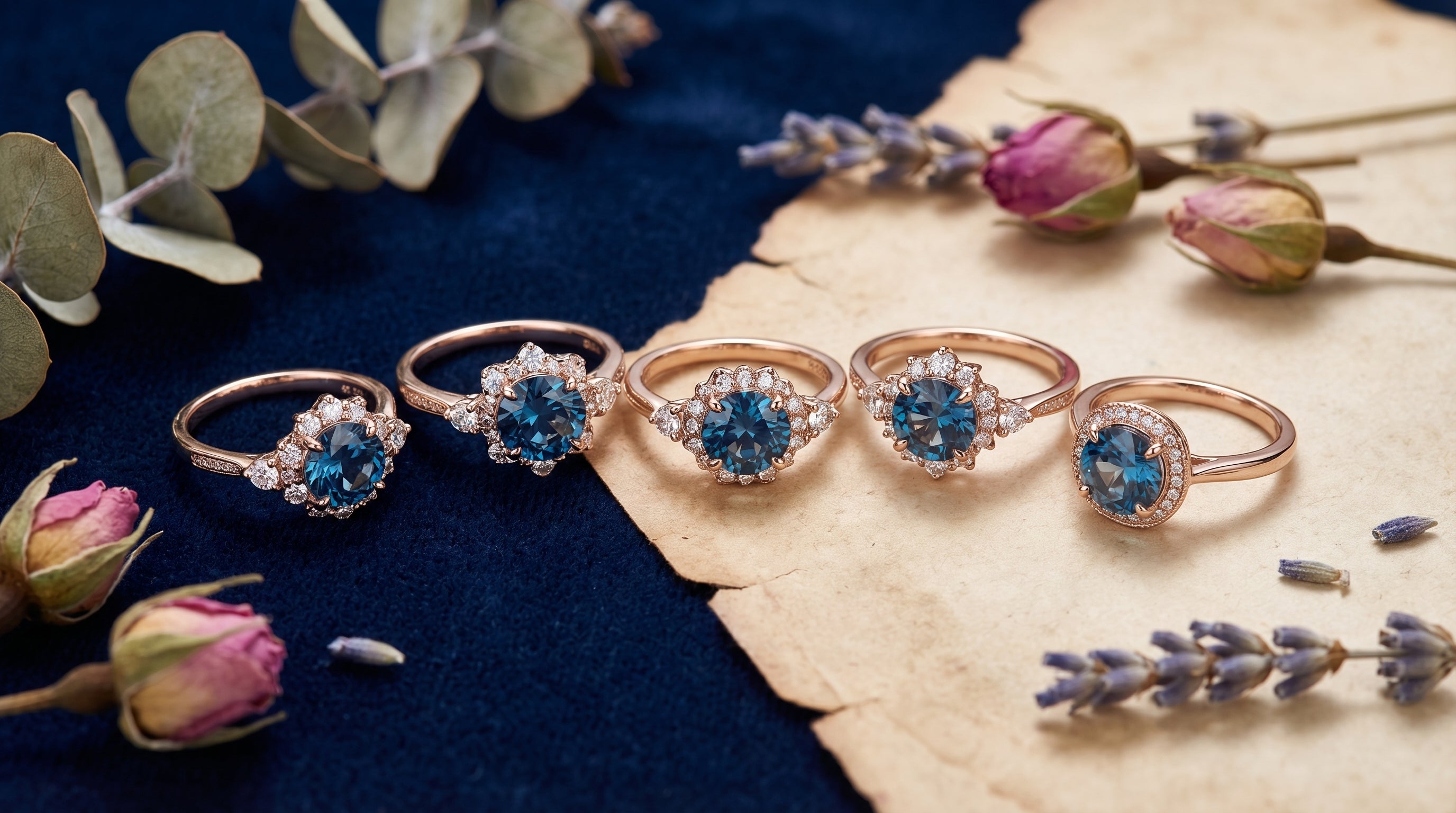
Sapphire engagement rings meaning isn't just a romantic idea—it's a centuries-old language of loyalty, truth, and enduring love that modern couples are rediscovering in 2026. Blue, pink, green, white: each hue tells a different story. And if you've ever wondered whether a colored stone can carry the same emotional weight as a diamond while outperforming it on brilliance and durability, you're about to find out exactly why the answer is yes.

The Deep Meaning Behind Sapphire Engagement Rings
The meaning of sapphire engagement rings centers on loyalty, truth, sincerity, and enduring love. Historically worn by royalty and clergy to symbolize wisdom and divine favor, sapphires represent a relationship built on a foundation of deep trust, honesty, and unwavering faithfulness.
To understand the weight of a sapphire ring, you have to look back through history. Long before diamond marketing campaigns took over the twentieth century, sapphires were the ultimate symbol of romantic commitment and noble character. In ancient Greece and Rome, kings and queens wore blue sapphires as protective talismans, believing the stones would shield them from envy and harm. The deep, celestial blue was thought to represent heaven itself—connecting earthly love to spiritual wisdom and divine favor. Clergy members wore them to symbolize devotion to a higher truth.
By the fourteenth century, giving a sapphire as a token of affection was a recognized way to pledge fidelity. The stone became a wearable promise. If you gave someone a sapphire, you were telling them your intentions were pure, your loyalty was absolute, and your love was built to last. This isn't a passing trend. It's a continuation of a rich, centuries-old tradition that still resonates deeply today.
And then there's the most famous sapphire ring in modern history. The 12-carat oval blue sapphire surrounded by a diamond halo—originally worn by Princess Diana, now worn by Catherine, Princess of Wales—cemented the gemstone's association with timeless romance and royal elegance. That single piece reminded the world that an engagement ring doesn't have to be colorless to be breathtaking. A pop of vivid color can carry immense emotional weight, making the sapphire a luxurious, intentional choice rather than a compromise.
Decoding Sapphire Colors and Their Symbolism
Sapphire colors carry distinct meanings. Blue sapphires symbolize honesty and calmness. Pink sapphire rings represent romantic love and compassion. A green sapphire engagement ring signifies renewal and balance, while white sapphire engagement rings offer a minimalist aesthetic symbolizing pure, clear intentions.
Here's the thing—"sapphire" doesn't just mean blue. The mineral corundum forms in almost every color of the rainbow. The only exception is red, which we call a ruby. Every other hue is a sapphire, and each color brings its own energy and symbolism to your engagement story.
Blue Sapphires: The Benchmark of Loyalty
Blue is the archetypal sapphire color. Psychologically, it evokes calmness, stability, and profound trust. In the context of a marriage proposal, a blue sapphire communicates a desire for a relationship grounded in emotional steadiness and transparent communication. It says, "You are my safe harbor." The deep blue hues catch the light with a quiet, confident grace—sophisticated without ever feeling flashy. For couples who value tradition but want a ring with a distinct personality, the classic blue sapphire remains an unmatched symbol of honest, enduring partnership.
Pink Sapphire Rings: Romance and Resilience
If blue is the color of calm stability, pink is the color of passionate, joyful love. Pink sapphire rings offer a more playful, tender take on traditional sapphire symbolism. Gemological experts and jewelry historians link pink sapphires to peace between lovers, emotional openness, and resilience through hardship. Pink sapphire engagement rings have surged in popularity in 2026, appealing to brides who want a ring that feels undeniably romantic. The color ranges from a soft, whisper-light baby pink to a vibrant electric magenta. Set in warm metals, these stones radiate a flattering glow that captures the feeling of new love blossoming into a lifelong commitment.
Green Sapphire Engagement Ring: Nature and Renewal
For the bride who feels a deep connection to nature, a green sapphire engagement ring is a breathtaking choice. Green sapphires fall into the "fancy sapphire" category, prized for their earthy, organic beauty. Symbolically, green represents growth, renewal, and balance—the color of spring, of new beginnings, of a love that continues to flourish year after year. These stones often flash hints of yellow or blue depending on how the light hits them. Choosing a green sapphire signals a desire for a relationship that's grounded, authentic, and constantly evolving.
White Sapphire Engagement Rings: Clarity and Elegance
Sometimes the most powerful statement is the quietest one. White sapphire engagement rings feature colorless corundum, offering a brilliant, diamond-like appearance with a softer, more silvery glow. Because they lack color-causing impurities, white sapphires symbolize pure intentions, clarity of thought, and unclouded judgment. They appeal to shoppers who want the ethical and emotional resonance of a sapphire but prefer a minimalist, neutral aesthetic. Their understated elegance is genuinely chic—a sophisticated way to wear ancient symbolism every single day.
Vintage Styles and Gold Settings
Vintage sapphire engagement rings carry a sense of history and timeless romance, connecting your love story to generations past. Pairing these gems with specific metals alters their vibe; sapphire engagement rings gold settings bring out warm, regal tones that enhance the stone's natural beauty.
The gemstone is only half the story. The way a stone is set—and the metal that surrounds it—fundamentally changes the ring's character and the message it conveys. The interplay between the sapphire and its setting is where true personalization happens.
Vintage Sapphire Engagement Rings
There's an undeniable magic to vintage sapphire engagement rings. Whether you're looking at a genuine antique from the Art Deco period or a modern ring crafted with vintage-inspired details like milgrain edges and intricate filigree, these designs carry a profound sense of narrative depth. Vintage styles connect your modern romance to the grand love stories of the past. They feel like heirlooms from the moment you put them on. The geometric halos of the 1920s or the floral motifs of the Edwardian era provide a stunning framework for a colored center stone, amplifying the sapphire's historical associations with royalty and enduring faithfulness.
Sapphire Engagement Rings Gold Settings
The choice of metal is crucial. Sapphire engagement rings gold settings are enormously popular in 2026, but the specific shade of gold you choose dramatically impacts the ring's final look. Yellow gold provides a rich, warm contrast to blue and green sapphires, creating a regal, classic aesthetic that feels instantly timeless. White gold offers a sleek, cool backdrop that makes the color of the sapphire pop with sharp, modern intensity. Then there's rose gold. Pairing a pink sapphire with a rose gold band creates a seamless, monochromatic look that's overwhelmingly romantic—the soft pink tones of the metal enhance the blush of the stone, resulting in a ring that feels cohesive, feminine, and deeply personal. If you're exploring different metal options, our guide on 18k gold engagement rings provides excellent insights into choosing the perfect foundation for your forever piece.
Sapphire vs. Moissanite: Finding Your Perfect Stone in 2026
While sapphires score a 9 on the Mohs hardness scale, moissanite ranks higher at 9.25, making both excellent for daily wear. Moissanite offers superior brilliance and fire, providing a durable, ethical, and accessible alternative to traditional colored gemstones.
As you explore the meaning behind these beautiful rings, you'll inevitably hit the practical side of ring shopping: durability, light performance, and budget. This is where the conversation shifts to moissanite. In 2026, moissanite isn't just seen as a diamond alternative—it's a premium gemstone in its own right, offering remarkable benefits for couples who want the rich colors of a sapphire combined with unmatched sparkle.
Durability first. An engagement ring is meant to be worn every day, for the rest of your life. It'll bump against steering wheels, clink against coffee mugs, and endure the rigors of daily life. Sapphires are tough—they score a 9 on the Mohs scale, making them the second hardest natural gemstone after diamonds. Moissanite, born from silicon carbide, scores between 9.25 and 9.5. Its sharp, pristine facets stay that way decade after decade.
But here's where it gets interesting. Where moissanite truly pulls ahead is optical performance. Sapphires are beloved for their rich, velvety color, but they don't possess a high refractive index—they glow rather than sparkle. Moissanite has a refractive index of 2.65 to 2.69, higher than a diamond's 2.42 and significantly higher than a sapphire's 1.76 to 1.77. Its dispersion rating of 0.104 is 2.4 times that of a diamond. When light enters a moissanite stone, it shatters into a breathtaking display of rainbow fire and white flashes that you can see from across the room. If you love the symbolism of a blue or green stone but crave that intense, eye-catching scintillation, a colored moissanite is a revelation.
And moissanite is lab-grown, meaning its origins are 100% traceable, ethical, and environmentally conscious. Every piece from Awareness Avenue comes GRA certified, backed by a lifetime warranty, and ships with secure checkout and 30-day returns. We've helped over 250,000 customers find their perfect piece—and we know that peace of mind matters just as much as the ring itself. Here's a clear breakdown of how these two magnificent stones compare.
| Feature | Sapphire | Moissanite |
|---|---|---|
| Mohs Hardness | 9.0 (Excellent for daily wear) | 9.25 - 9.5 (Superior scratch resistance) |
| Brilliance (Refractive Index) | 1.76 - 1.77 (Soft, velvety glow) | 2.65 - 2.69 (Intense, fiery sparkle) |
| Color Options | Blue, Pink, Green, Yellow, White | Colorless, Blue, Green, Pink, Red, Purple |
| Origin | Mined naturally or Lab-grown | Exclusively Lab-grown (Ethical & Eco-friendly) |
| Price Point | High (especially for natural, untreated stones) | Highly accessible and value-driven |
Understanding these differences empowers you to make a choice that aligns with both your heart and your practical needs. If you're curious about how moissanite stacks up against other stones financially, our detailed breakdown on moissanite vs lab diamond price offers a comprehensive look at what you're really paying for in 2026.
What to Know Before Buying a Sapphire Ring
Before buying a sapphire ring, evaluate its color saturation, clarity, cut quality, and carat weight. Understand that 90 to 95 percent of natural sapphires undergo heat treatment to enhance their hue. Always request independent lab reports to verify the gemstone's authenticity and treatment status.
Shopping for a colored gemstone requires a slightly different vocabulary than shopping for a diamond. While the famous "Four Cs" still apply, the hierarchy of importance shifts dramatically. Color is the undisputed king. Unlike diamonds—where the absence of color is prized—a sapphire's value is entirely dependent on the intensity and purity of its hue. A blue sapphire should be a true, deep blue: not so dark it looks black in low light, not so pale it looks washed out. The same applies to pinks and greens; the color should be vibrant and evenly distributed across the face of the stone.
Clarity matters too, but you need to adjust your expectations. Natural sapphires almost always contain tiny internal characteristics called inclusions—small needles, feathers, or crystals. In the gem trade, a high-quality sapphire is considered "eye-clean," meaning you can't see these inclusions without a jeweler's loupe. Completely flawless natural sapphires are exceedingly rare. In fact, certain inclusions actually prove a stone's natural origin.
One of the most critical things to understand is heat treatment. Industry experts estimate that up to 95 percent of all natural sapphires on the market have been heated to extremely high temperatures. This is a permanent, stable, and widely accepted practice used to improve color and dissolve certain inclusions. It's not a trick—it's standard operating procedure. A reputable jeweler will always disclose whether a stone has been heated.
Finally, you must decide between natural and lab-grown stones. Lab-grown sapphires are chemically, physically, and optically identical to natural sapphires. They're real sapphires, just grown in a controlled environment rather than pulled from the earth. They offer flawless clarity and perfect color saturation at a fraction of the cost. Similarly, colored moissanite provides an ethical, lab-grown alternative that delivers the specific colors you desire with a massive upgrade in brilliance and fire.
Our Top Sapphire-Inspired Moissanite Recommendations
Discover our curated selection of vibrant, sapphire-inspired moissanite rings for 2026. These stunning pieces deliver the rich colors and profound symbolism of traditional sapphires, combined with the unmatched brilliance, ethical origins, and exceptional durability of premium lab-grown moissanite.
At Awareness Avenue, we don't think you should have to compromise between profound meaning, breathtaking sparkle, and ethical peace of mind. Our colorful moissanite rings collection captures the emotional resonance of sapphires while delivering the intense fire that only moissanite can provide. Here are some of our most beloved pieces that perfectly embody the spirit of colored gemstone engagement rings.
The Ulissa Blue Moissanite Engagement Ring

If you're captivated by the historical symbolism of blue sapphires—the loyalty, the truth, the royal heritage—The Ulissa is your perfect match. This ring features a mesmerizing blue moissanite center stone that rivals the deepest ocean hues. Surrounded by a delicate halo of colorless moissanite accents, the blue center is pushed into the spotlight, creating a striking contrast that catches the eye from across the room. It carries the calm, steady energy of a blue sapphire—then erupts with rainbow fire the moment it hits direct sunlight. A modern masterpiece for a love story rooted in deep trust.
The Camille 2CT Oval Cut Green Moissanite Ring

For the bride who finds her peace in nature, The Camille is nothing short of spectacular. Featuring a lush, vibrant 2-carat oval cut green moissanite, this ring embodies the symbolism of growth, renewal, and balance. The 18k gold setting warms up the green hues, creating an earthy, organic aesthetic that feels both vintage and entirely fresh. The oval cut elongates the finger gracefully, while the brilliant faceting ensures the green stone sparkles with a lively, dynamic energy that traditional green sapphires can't match. It's a ring for the woman who writes her own rules.
The Bethany Rose Gold Engagement Ring

If the romantic symbolism of pink sapphires speaks to your heart, you'll fall in love with The Bethany Rose Gold Engagement Ring. The warm, blush tones of the rose gold setting create a cohesive, feminine look that represents compassion, peace, and intense passion. The brilliant round cut center stone maximizes light return, ensuring the ring dazzles from every angle—that satisfying flash of rainbow fire when your hand catches the light is something you'll never get tired of. The design feels soft and tender, yet the moissanite stone provides the fierce durability needed for a lifetime of daily wear. Gentle and unbreakable. Just like the best kind of love.
The Juliana 2CT Oval Green Moissanite Ring

Another stunning option for lovers of green gemstones is The Juliana. This ring takes the concept of a green center stone and elevates it with sophisticated, intricate detailing along the band. The 2-carat oval green moissanite serves as a bold, vibrant centerpiece, symbolizing a love that's constantly renewing itself. The craftsmanship of the setting ensures that light enters the stone from multiple angles, highlighting the rich, forest-green depths of the gem. It commands attention without ever feeling ostentatious—perfect for a partner who appreciates unique, meaningful design.
Frequently Asked Questions
Have questions about sapphire engagement rings and their meanings? We've compiled the most common inquiries from couples in 2026 to help you understand durability, color symbolism, and how these beautiful gemstones compare to brilliant alternatives like moissanite.
Are sapphire engagement rings durable enough for everyday wear?
Yes, absolutely. Sapphires score a 9 on the Mohs hardness scale, making them the second hardest natural gemstone after diamonds. They're highly resistant to scratching, chipping, and cracking—an exceptionally safe and reliable choice for a ring you'll wear every single day. That said, if you want even greater durability, moissanite scores between 9.25 and 9.5, offering a slight but meaningful edge in long-term toughness.
What does a pink sapphire engagement ring mean?
A pink sapphire engagement ring is a powerful symbol of romantic love, compassion, and feminine energy. While blue sapphires represent calm loyalty, pink sapphires are associated with peace between lovers, emotional openness, and resilience through hardship. They're chosen by couples who want their ring to reflect a joyful, passionate, and deeply tender connection.
Is moissanite a good alternative to a sapphire ring?
Moissanite is an outstanding alternative to a sapphire ring. While sapphires offer beautiful, velvety colors, they lack the intense sparkle of a diamond. Moissanite is the most brilliant gemstone available—with a refractive index of 2.65 to 2.69 and dispersion 2.4 times that of a diamond. By choosing a colored moissanite (blue, green, or pink), you get the exact color symbolism of a sapphire combined with massive sparkle, greater durability, and a fully ethical, lab-grown origin at a much more accessible price point.
Do white sapphires look exactly like diamonds?
White sapphires are colorless and genuinely beautiful, but they don't look exactly like diamonds. Their lower refractive index produces a softer, more silvery glow rather than the sharp, rainbow-colored fire that diamonds exhibit. If you're looking for a diamond alternative that mimics that intense, fiery scintillation, moissanite is a far superior choice to white sapphire—and it costs a fraction of the price.
Final Advice for Your Forever Ring
Choosing your engagement ring is a deeply personal journey. Whether you're drawn to the historical loyalty of a blue sapphire or the fiery brilliance of a colored moissanite, prioritize a stone that reflects your unique love story and stands the test of time.
The beauty of getting engaged in 2026 is that the old rules no longer apply. You don't have to settle for a standard, colorless stone if your heart beats for vibrant color. The sapphire engagement rings meaning—steeped in truth, wisdom, and eternal faithfulness—provides a beautiful emotional foundation for your commitment. Whether you choose the calming presence of blue, the romantic blush of pink, or the earthy renewal of green, your ring will speak volumes about the life you're building together.
And honestly? You deserve a ring that performs just as beautifully as it looks. Colored moissanite offers a modern, intelligent way to capture the profound symbolism of a sapphire while upgrading your ring's brilliance, durability, and ethical footprint. It's about making a choice that feels right for your values, your budget, and your personal style. If you're ready to find the piece that perfectly captures your story, browse our moissanite engagement rings or discover the vibrant hues in our colorful moissanite rings collection to find the sparkle that will last a lifetime.

Leave a comment
This site is protected by hCaptcha and the hCaptcha Privacy Policy and Terms of Service apply.